
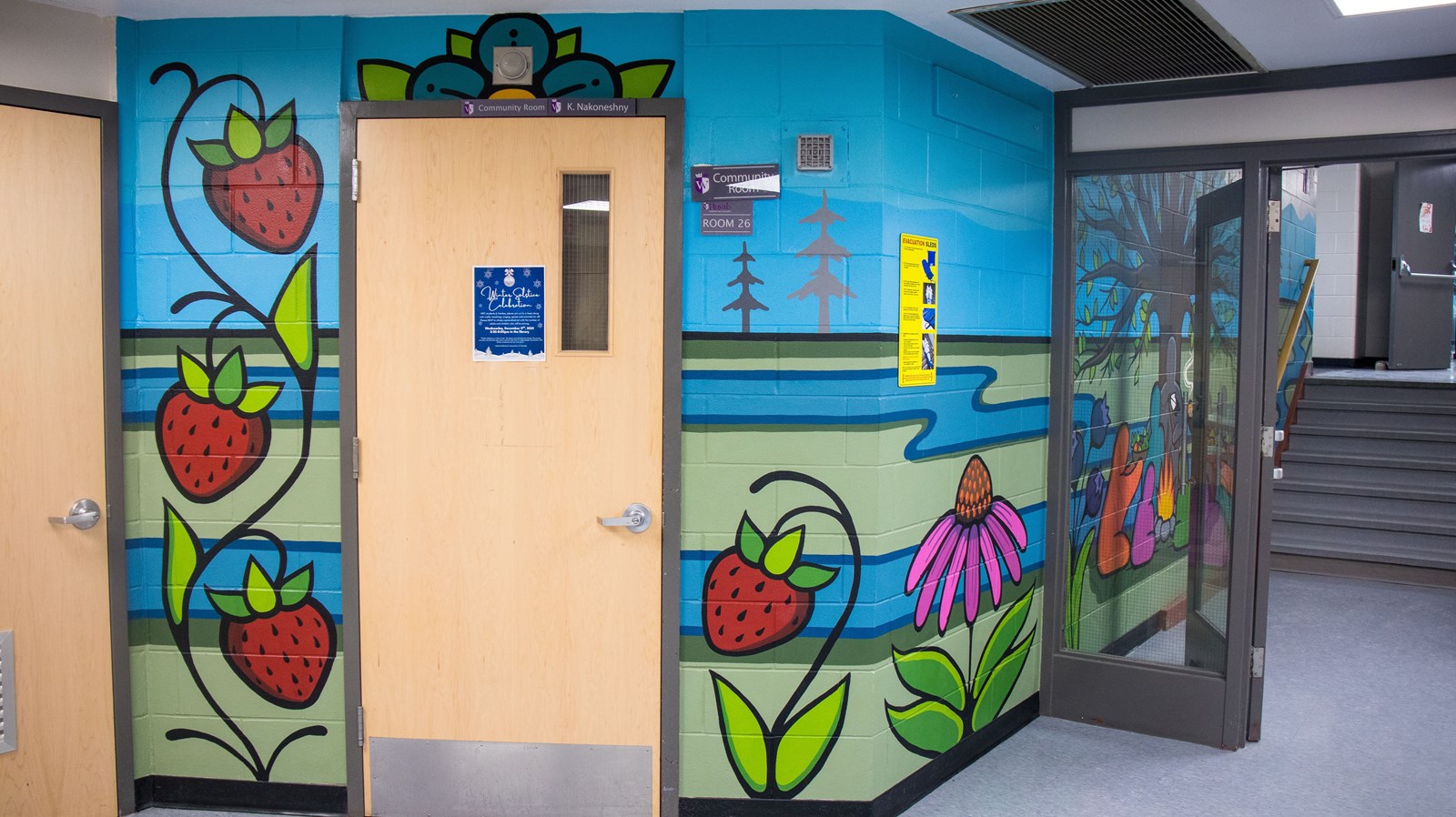
Two Windsor Park Collegiate (WPC) hallways are now brighter and more meaningful thanks to new murals painted by local artist and Louis Riel Arts and Technology Centre graduate Justine Proulx. Supported by the Orange Shirt Day Fund, the project brought a long-standing vision to life through collaboration, student voice, and Indigenous teachings.
The idea began when Justine visited an Indigenous Youth Leadership (IYL) meeting and shared examples of murals she painted in other schools. Her visit sparked interest among students who saw an opportunity to create artwork that reflected their school, community, and identities.
“She just asked us what kind of mural we would want to do and what some meanings we would want in it,” said Marleigh Letandre, a Grade 12 IYL student. “It was very student-led.”
From the outset, Proulx worked directly with the IYL students, guiding discussions around symbols, themes, and stories they felt were important to represent. That collaborative approach ensured the murals were shaped by many voices—including students who were new to WPC.
"Which was nice, because even students new to the school this year were able to contribute and get a better understanding of the school through those meetings,” said Kristy Nakoneshny, WPC’s Community Liaison Worker.
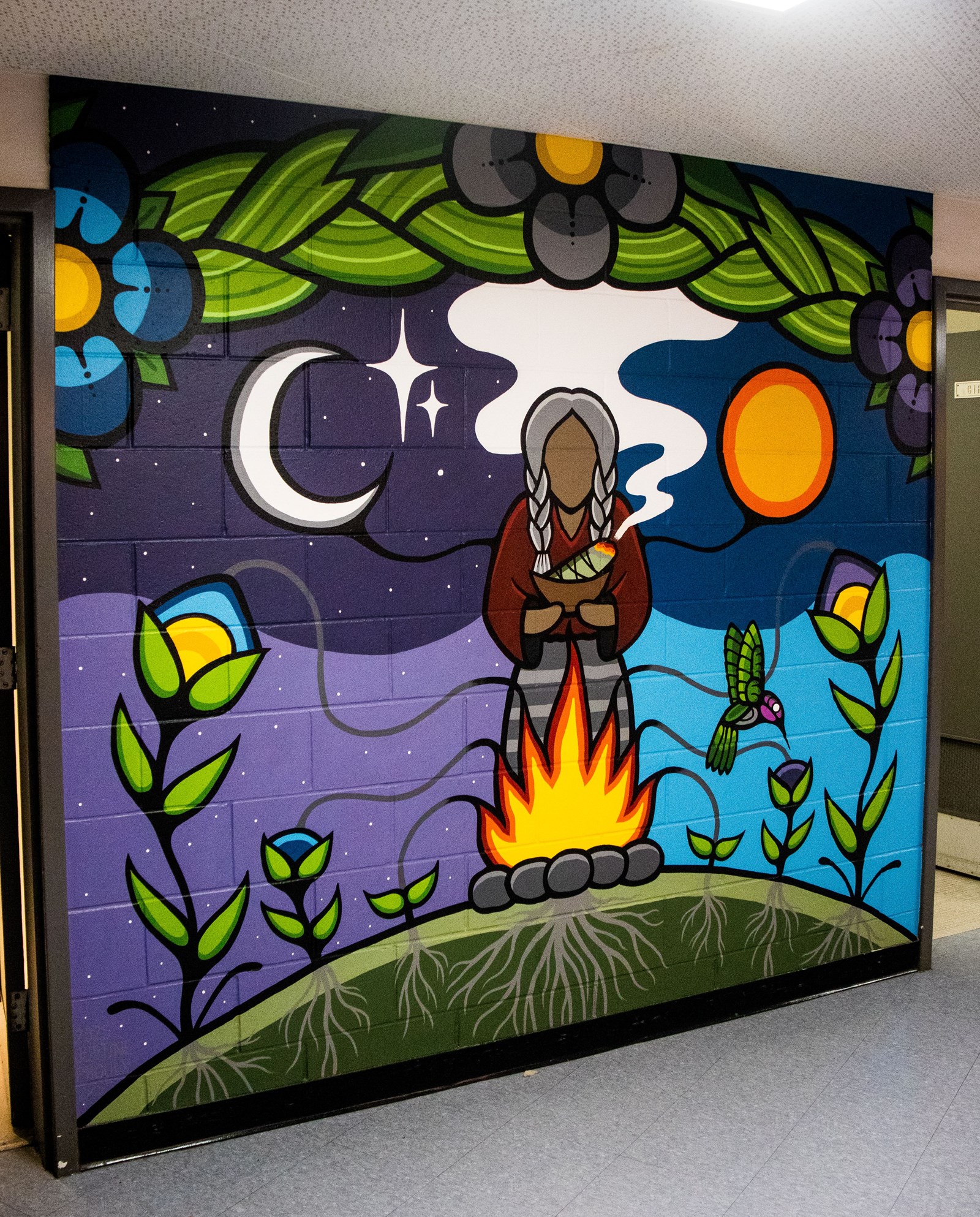
One of the murals centres on a matriarchal figure and features a hummingbird, representing Kookum Hilda, an Elder who shared traditional teachings and stories with students and played a significant role in the Buffalo Riders Indigenous wellness program. The mural incorporates sweetgrass, fire, a smudge bowl, and the sun rising in the east with the moon setting in the west—symbols that reflect balance, healing, and the holistic connection between body, mind, and spirit.
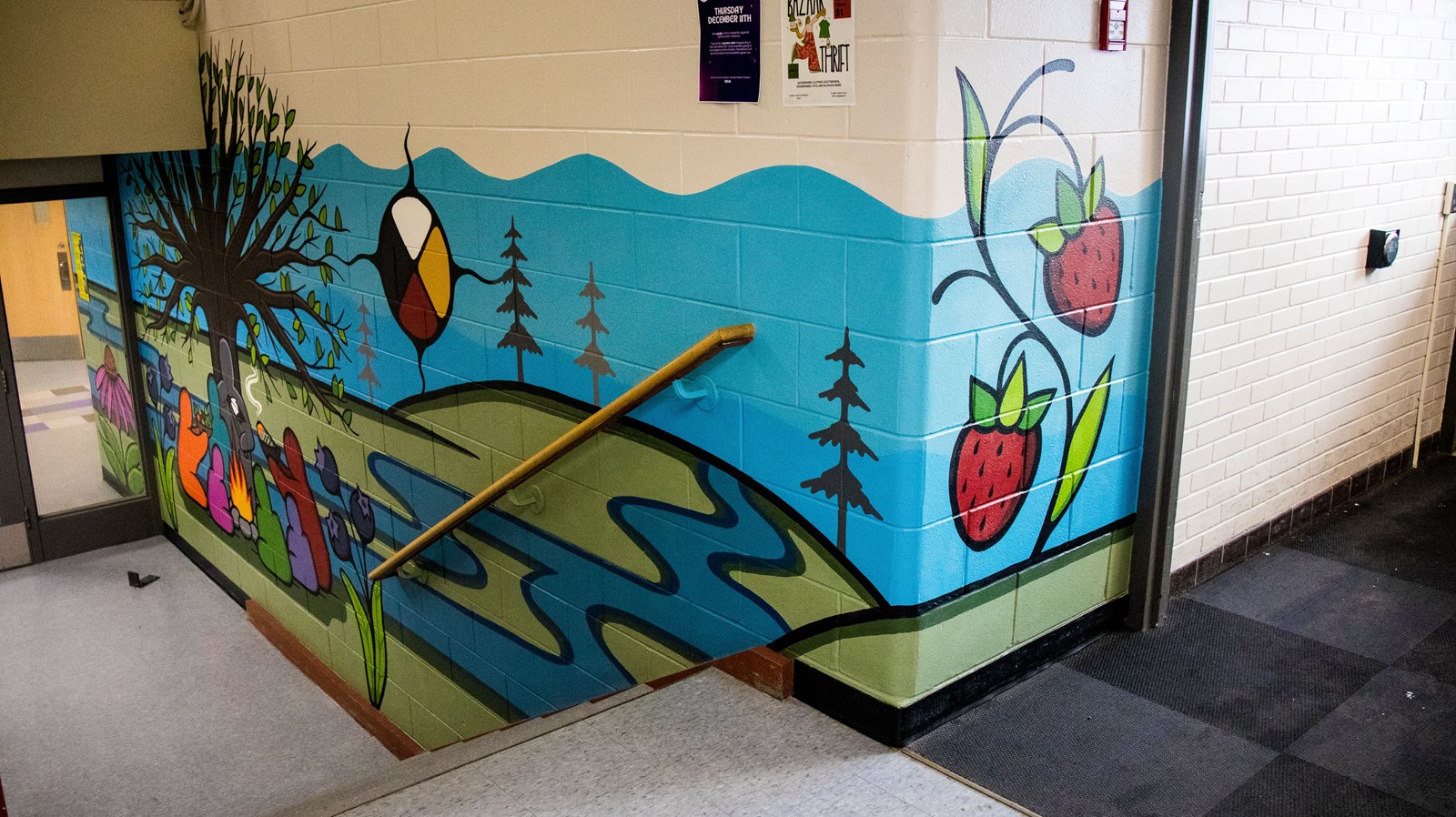
The second mural focuses on community, togetherness, and shared learning. It includes imagery such as berries, trees, fire, rivers, and people sharing food and smudging, as well as references to the Circle of Courage. Together, the elements reflect the importance of relationships, knowledge-sharing, and cultural teachings within the school community.
As the murals took shape, they sparked curiosity in the student body.
“Lots of students who didn’t know what was going on were asking questions—why we were doing murals, what the symbols meant,” said Kristy. “It created a lot of interest and conversation.”
That response was intentional. The murals are located in high-traffic areas near the main bathrooms and stairwell leading to the community room—spaces students access daily.
For students like Marleigh, seeing their ideas transformed into artwork was powerful. “I didn’t really visualize it until she started painting,” she said. “It was really cool to see how she put all the words into something that she could paint and make work.”
Staff hope the murals will continue to serve as visual teaching tools—encouraging reflection, questions, and learning through art.
“It’s representation,” said Christy Capner, a Student Services Teacher at WPC. “I think it is important for our Indigenous students to see the art in the hallways be reflected and the teachings to come with it, and I think it is important for every student to know and be able to learn about the intricacies of woodland art.”
While the murals mark a significant milestone, the school sees them as a beginning.
“The hope is that this is just the start,” said Christy. “Art like this opens doors to curiosity, conversation, and deeper understanding.”