
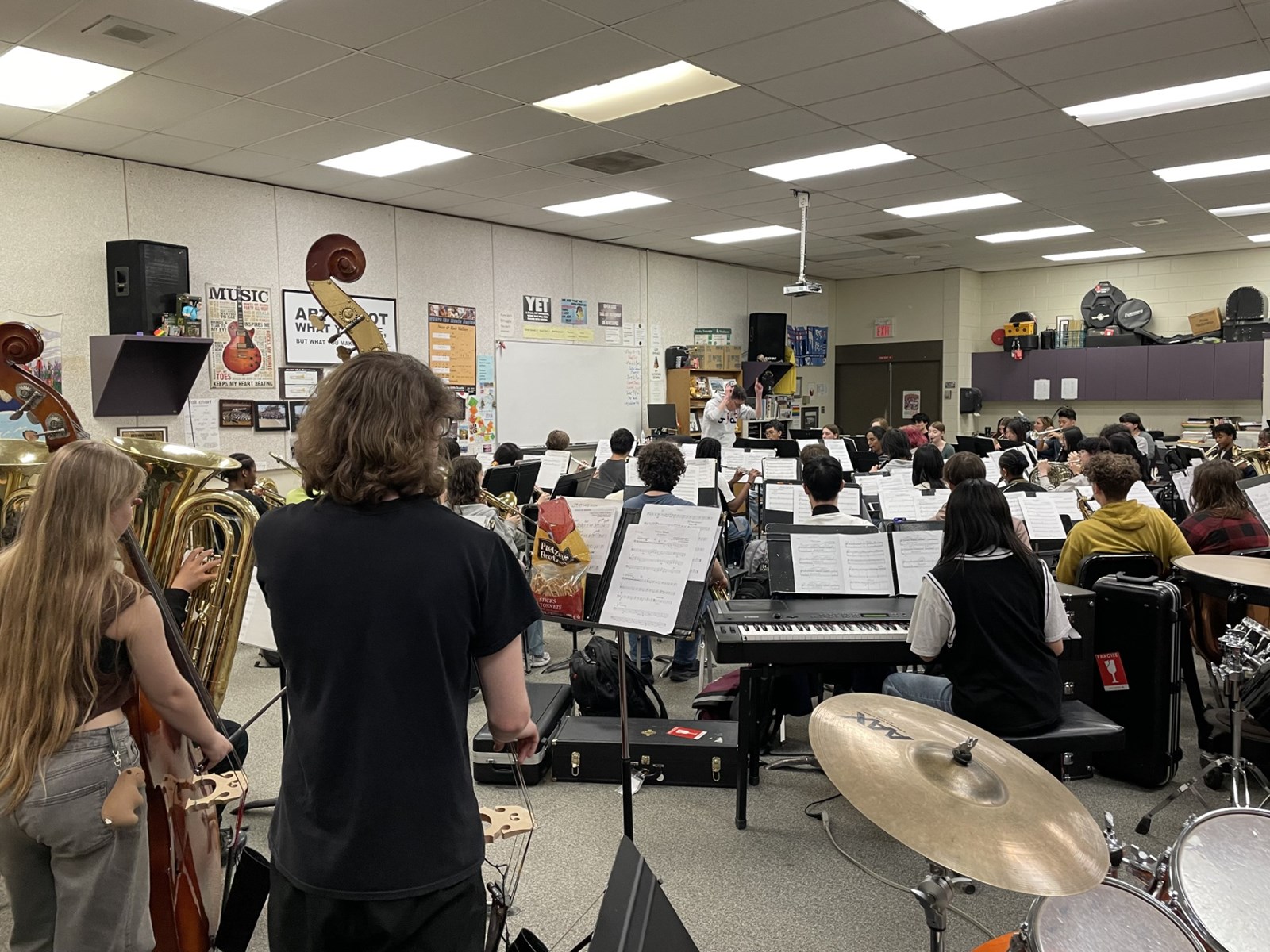
Dakota Collegiate Institute (DCI) wind ensemble students welcomed Cree composer Andrew Balfour to their class on April 24 to conduct his song “Vision Chant.” Originally written for choir, the piece was later arranged for wind ensemble by Mark Hopkins.
For band director Darren Ritchie, the opportunity was both professionally meaningful and personally special.
“I couldn’t believe my luck,” Ritchie shared. “I was searching for music by Indigenous composers and came across this piece. Then I realized it was written by Andrew—someone I had known though the Winnipeg music scene.”
Coordinating the visit required careful planning. Balfour, a sought-after composer who frequently travels across North America for performances and clinics, had only a brief window in Winnipeg. When the timing aligned, Ritchie seized the chance to bring the experience to his students.
In preparation, the DCI wind ensemble worked diligently to learn “Vision Chant” in advance. “We wanted to make sure the foundation was there,” Ritchie said. “Then Andrew could come in and take it further.”
For students, the rehearsal experience deepened their understanding of the piece beyond notes and technique.
“It taught me to think more about the story behind the music to get a better understanding of it,” said Makena, a Grade 10 student in the wind ensemble. “And to be more insightful and put more emotion into my playing.”
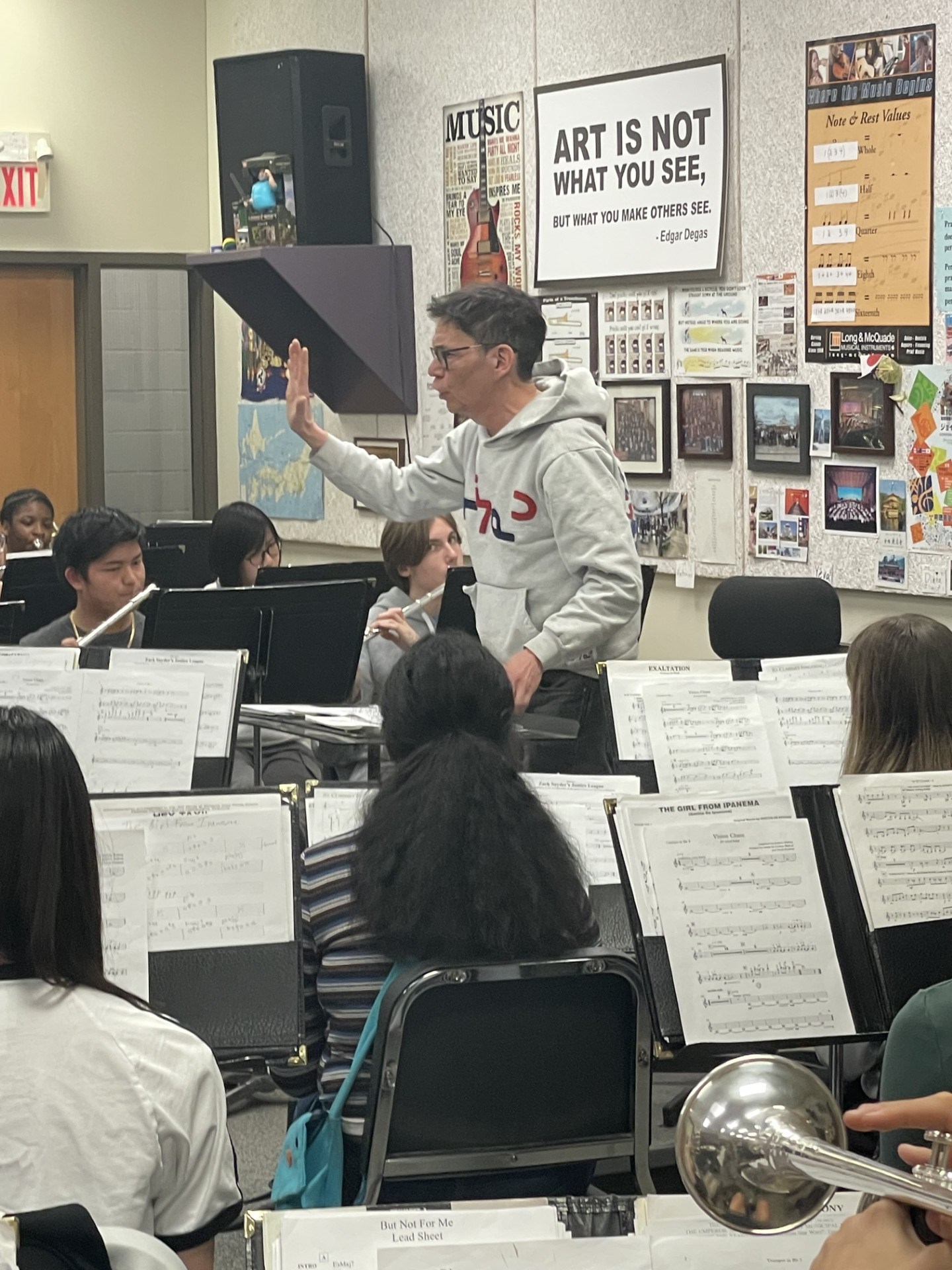
Through Balfour’s guidance, students explored not only the technical aspects of the composition, but the deeper meaning behind the music; something that cannot always be fully captured in notation alone.
“It was special to know how unique this experience was because Andrew normally works with choirs and older ensembles,” said Sarah, a Grade 11 student in the wind ensemble. “It was interesting to hear the perspective of someone who has taught this same piece to more experienced musicians.”
“He brought so much more to the song,” added Ritchie. “Instrumental music can leave room for interpretation, which is a strength. But hearing directly from the composer, understanding what the sounds and dynamics represent, added a whole new layer.”
Students also felt the impact of working directly with the composer.
“Andrew talked about visualizing different images for parts of the piece,” shared Andrei, a Grade 10 student in the wind ensemble. “For example, he suggested visualizing a crow for the bassline in the middle section. While the rest of the band is playing something more choir-like, the bassline comes in very suddenly and unexpectedly. He explained that the crow represents a trickster spirit.”
The visit was also a powerful moment of connection and reflection. Ritchie recalls a particularly meaningful exchange during the rehearsal.
“He told the students, ‘On Reconciliation - for Canada to survive, we need to be hand in hand. You playing this piece, and by playing this piece so well...you honour myself, the Indigenous Peoples, and the Canadian mosaic. You are healing now. That's the power of music,’” Ritchie said. “That really stuck with all of us.”
For students, the experience highlighted how music can serve as a pathway toward understanding and shared learning.
“Andrew shared that he had two visions in his life,” said Rica, a Grade 11 student in the wind ensemble. “One was about feeling protected by the people in his life, and the other was about when he reconnected with his Indigenous identity. I interpreted his backstory to the band piece as his two visions where he feels fearful on the vision, but when he was protected by his loved ones, he felt fearless and moved into a peaceful state.”
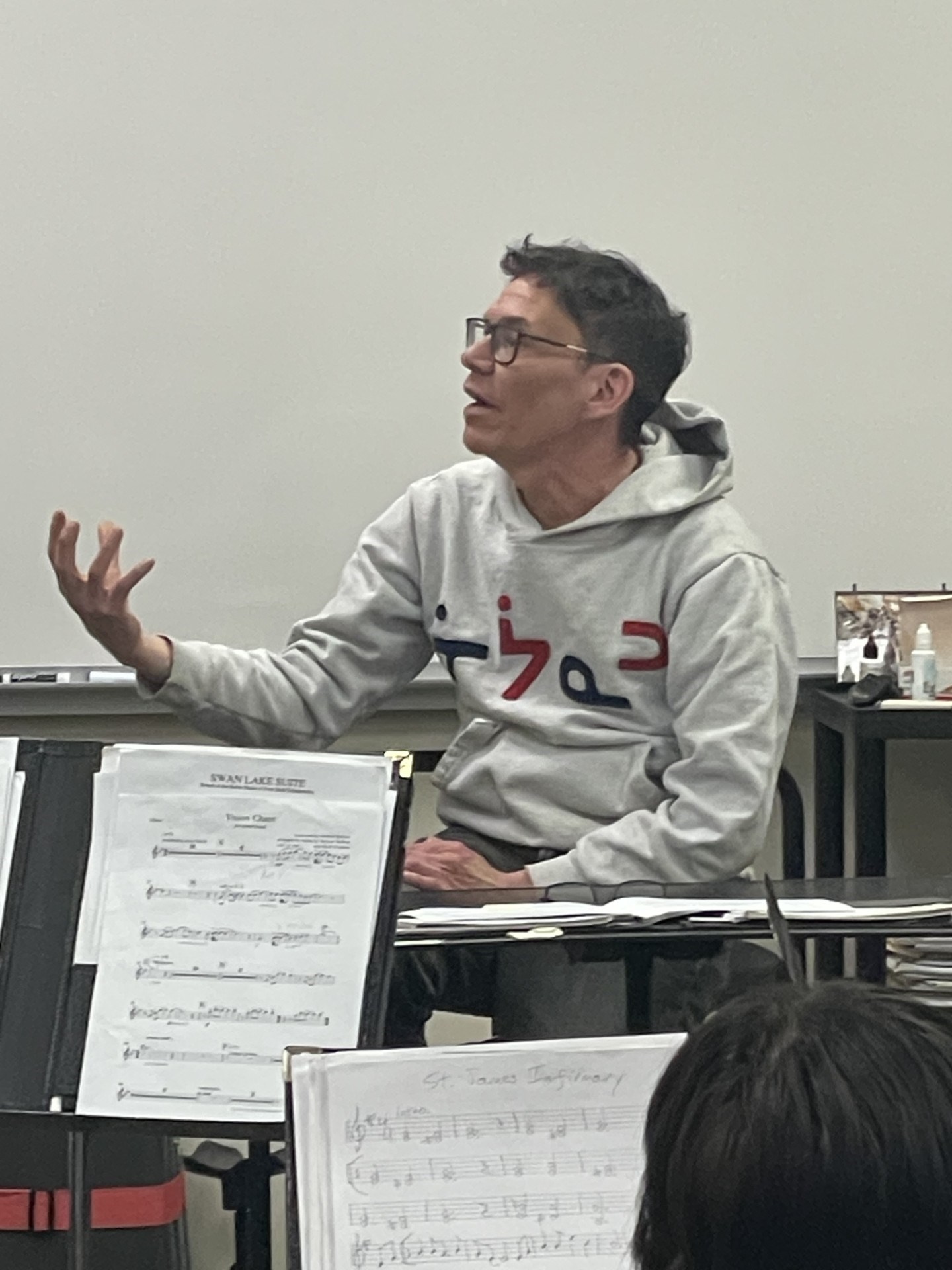
Authenticity is something Ritchie has been intentionally prioritizing in his program.
“In the last several years, I’ve been really mindful of choosing music that reflects the students in front of me,” he said. “That means programming pieces from a variety of cultural backgrounds—and doing so in a way that’s respectful and meaningful, not just for the sake of it.”
Through composers like Balfour, students are also seeing new possibilities for how Indigenous artistry is expressed.
“Andrew mentioned that us, as a band, performing “Vision Chant” helps support his community,” said Rica. “It was eye-opening to me. Knowing that his community is still suffering and recovering from the tragedies and impacts of residential schools, made me feel honoured that we are helping his community in some small way through music.”
“His work shows that Indigenous art can take many forms,” Ritchie added. “It doesn’t have to fit into one traditional lens.”
As one of Canada’s leading Indigenous composers, Balfour continues to expand the presence of Indigenous music in spaces where it has historically been underrepresented. For the students at DCI, engaging directly with his work—and with him as an artist, created a learning experience that extends beyond the classroom.
“I think it’s something that will stay with them,” said Ritchie.
Through opportunities like this, DCI students are not only growing as musicians; they are developing a deeper appreciation for the stories, perspectives, and cultural connections that shape the music they play.