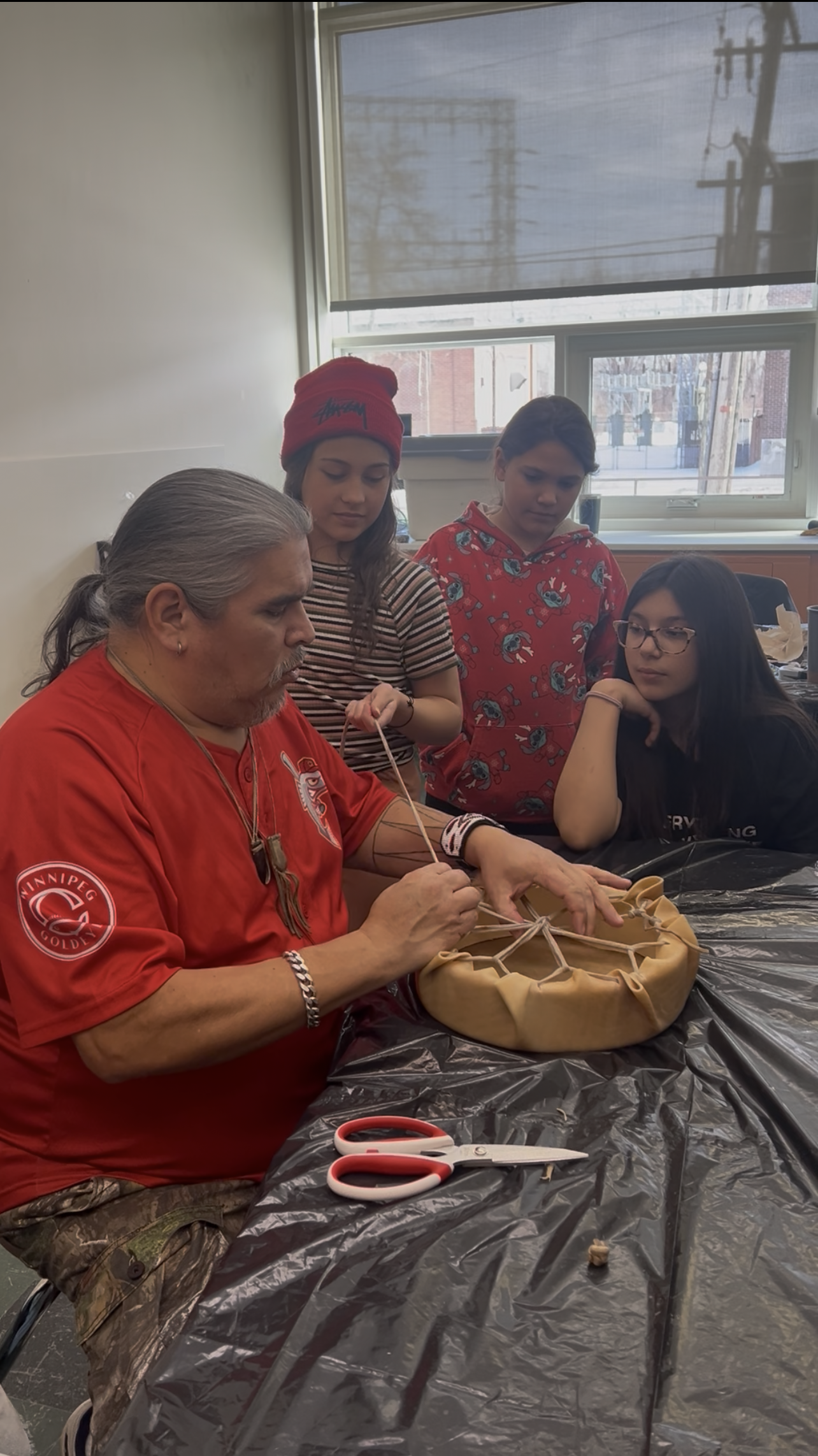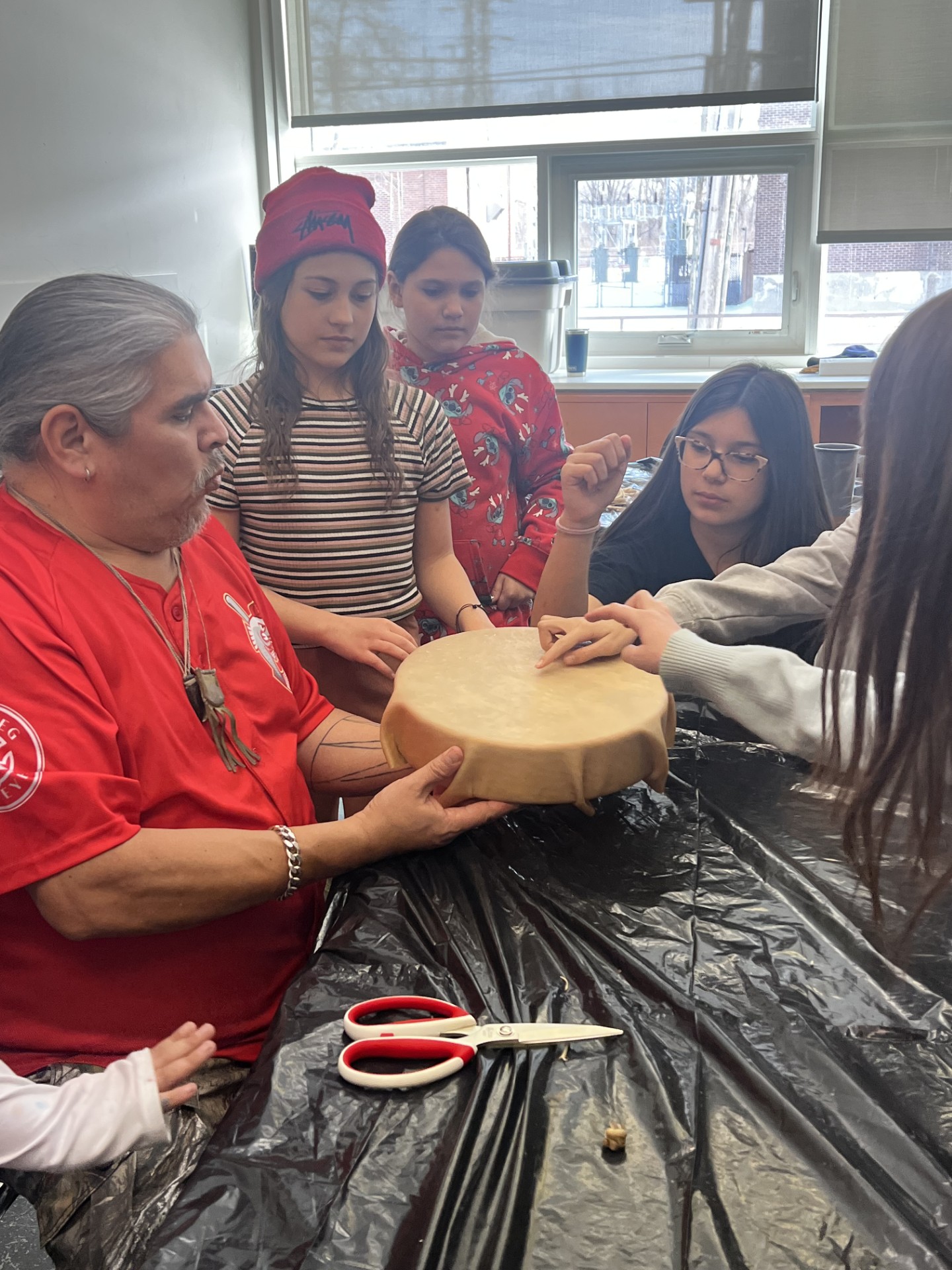
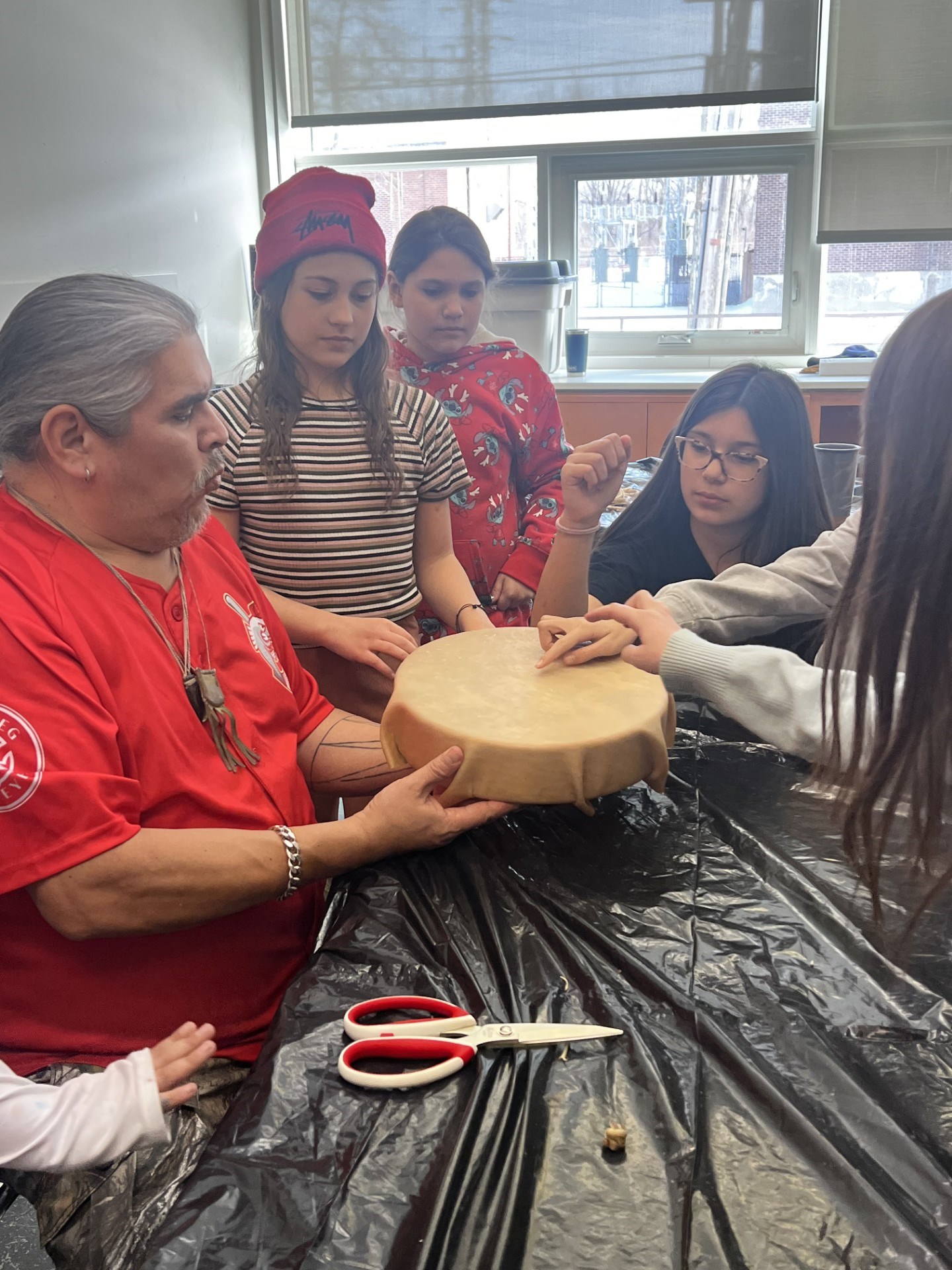
At Marion School, learning is coming alive through sound, story, and community. This year, students in the Marion Boys Group undertook the meaningful work of constructing a traditional big drum—an important cultural item that will be used in ceremony and at Powwow. Guided by Knowledge Carrier Eric Flett, students learned that drum‑making is about far more than building an instrument; it is about relationship, responsibility, and teachings carried forward.
Throughout the process of building the big drum, students were supported to approach the work with care, patience, and teamwork—even when the process was challenging. The project was strengthened through partnership and collaboration. Marion School worked with Nelson McIntyre Collegiate (NMC), using their industrial arts shop to construct the drum frame. Students were supported by Ryan Sabourin, Divisional Learning Team teacher, Tristan Shumaker, Industrial Arts teacher at NMC, and others who generously shared their time and expertise.
“Safety was a top priority, particularly as many Marion students were entering a high school woodshop for the first time,” said Mr. Shumaker.
With multiple experienced teachers present, students were supported at every step. Under the guidance of Knowledge Carrier Eric Flett, students collectively determined the construction method for the drum frame, choosing a vertical‑stave design rich in symbolism.
The design choices carried deep meaning: the 13‑inch drum height represents the 13 moons; seven walnut staves symbolize the Seven Sacred Teachings; and four pine staves placed between each walnut stave represent the Four Directions.
Students prepared the walnut and pine boards by planing them to a consistent thickness, then cutting them to the correct height using a mitre saw. Along the way, the work naturally incorporated learning across subject areas. A quick math lesson helped students calculate precise bevel angles so the staves would fit together properly during assembly.
Once the bevels were cut, students sanded each stave carefully to ensure smooth surfaces. They then arranged the pieces in the correct sequence, applied glue to the beveled edges, and used ratchet straps to bring the frame together. Throughout the glue‑up process, students continuously checked alignment to maintain the drum’s round shape.
After the glue had dried, the drum frame was sanded again, and holes were drilled for handles and air movement—preparing it for the next stage of the journey.
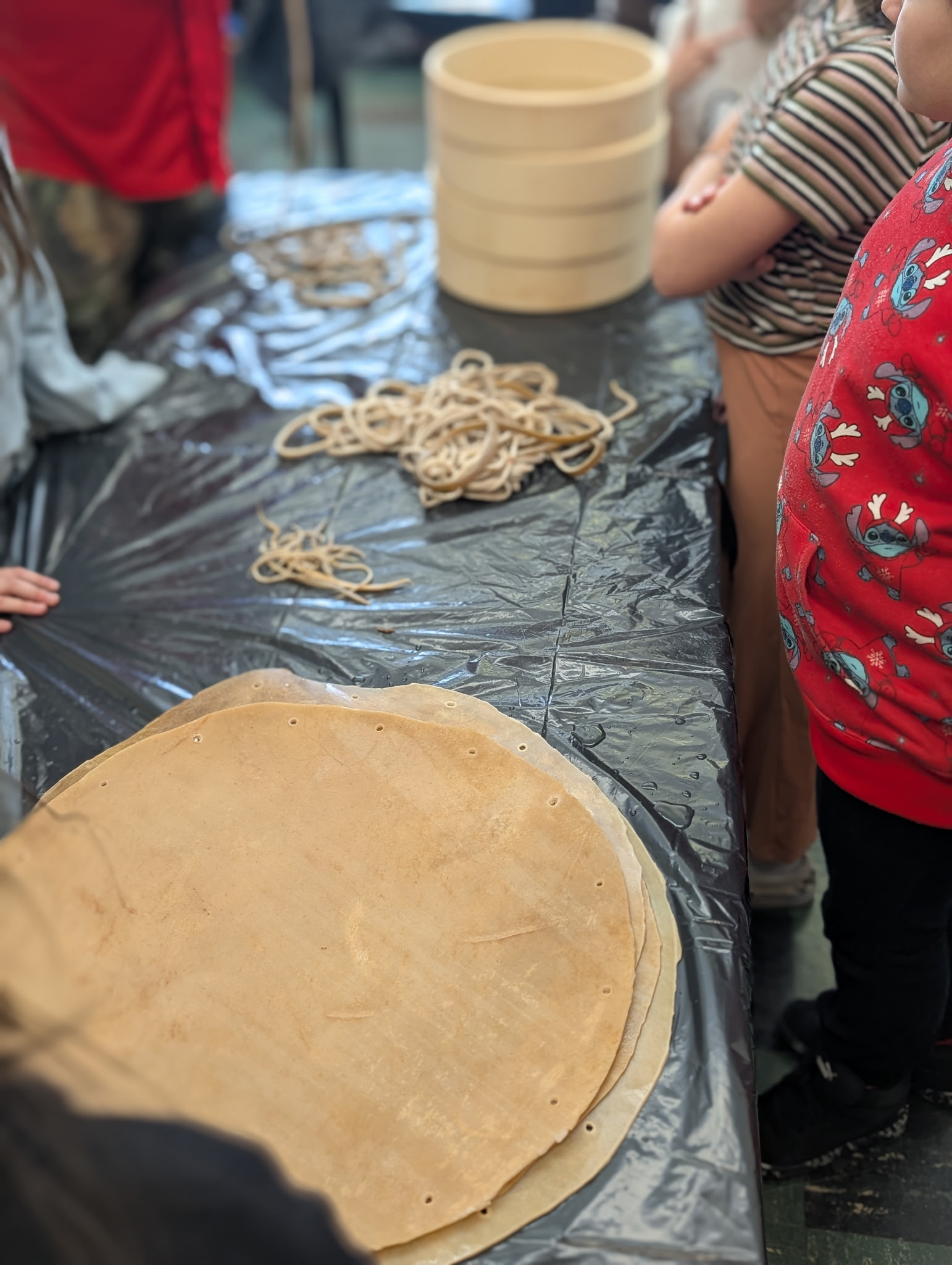
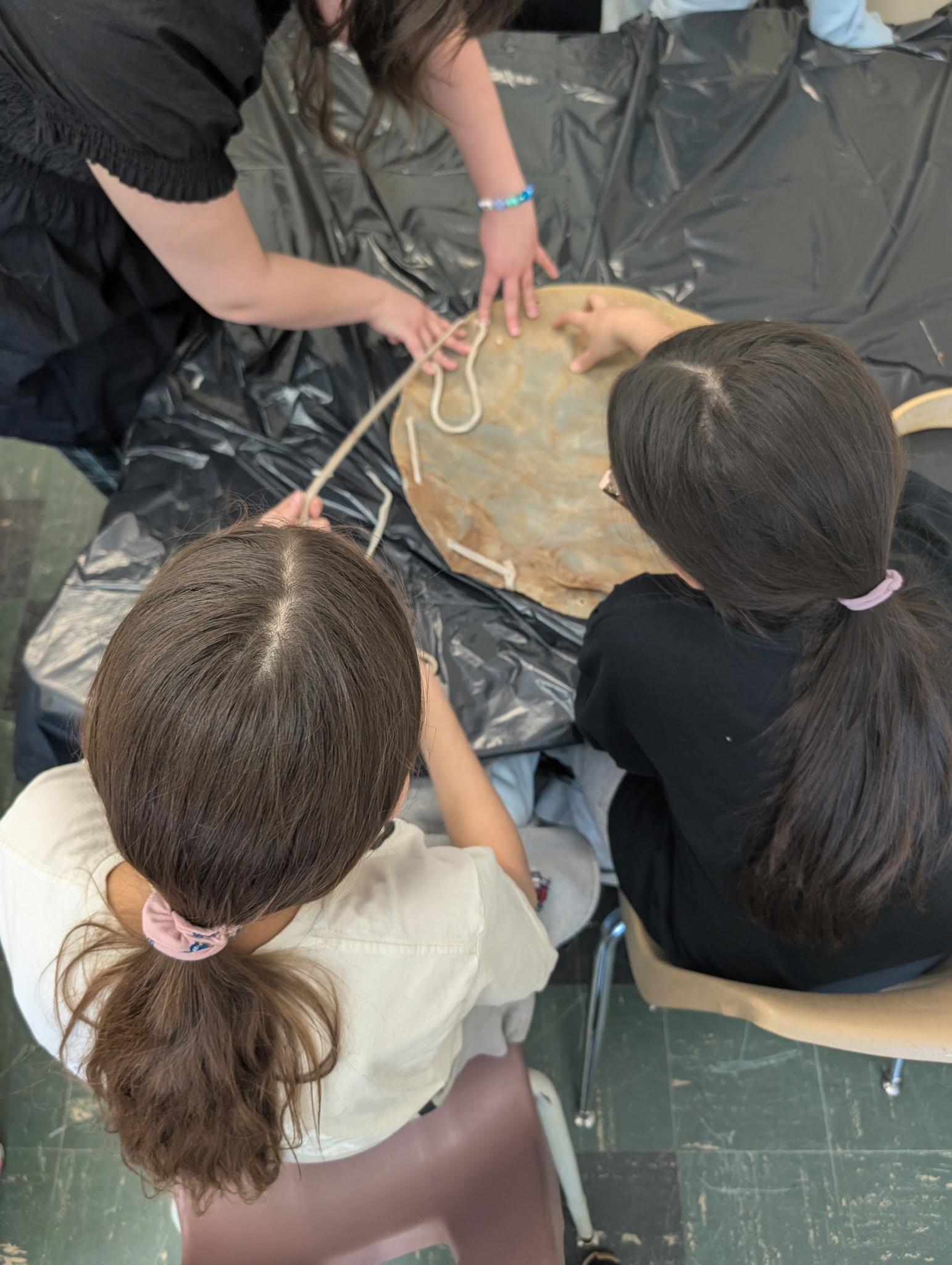
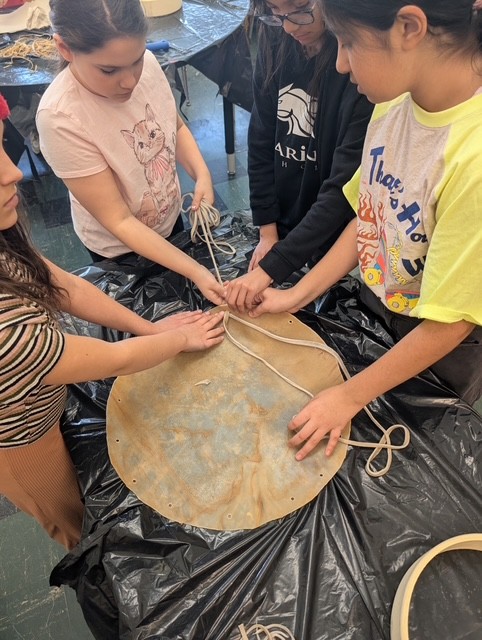
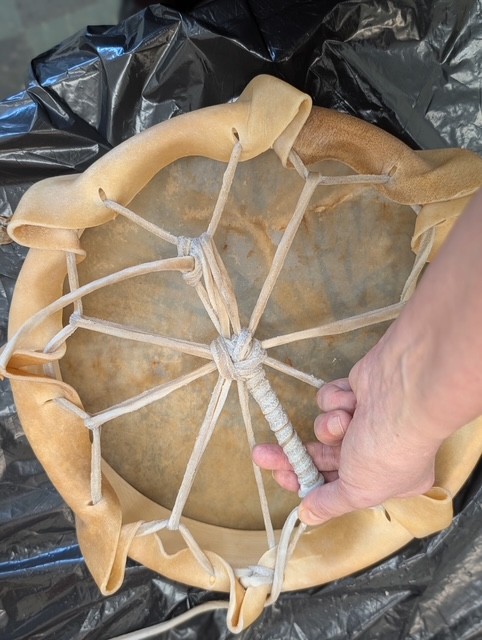
The work then returned to Marion School, where students prepared the drumskin using buffalo hide. This hands‑on process involved soaking, stretching, shaping the hide, carefully punching lacing holes, and weaving the lacing to complete the drum—steps that required patience, teamwork, and respect for the materials.
Alongside the big drum, students in the drum group also made hand drums with the support of Knowledge Carrier Eric Flett, Rose Bird, Tammy Bruce, and Judy Saunders McKay. Throughout this process, students received traditional teachings that emphasized listening, patience, and growth.
As Zoey shared, “Mr. Flett talked about the teachings and showed us how to make drums. He told us that it’s okay to make mistakes, and that it’s important to be a good listener.”
Adrianna echoed this learning, “He taught us that mistakes help us grow.” These teachings helped students approach the drum‑making process with care and confidence.
“That was my first time making a drum and it is really hard,” reflected Stella. “There are a lot of steps—you must let the materials dry very well, then you can finish your drum, and after the ceremony you can start drumming.”
These experiences deepened students’ understanding of culture and meaning. “It helped me understand my culture more,” said Zoey.
Adrianna shared a new appreciation as well, “I would never have this opportunity elsewhere. I always took drums for granted, but it is really hard to make them.”
Savannah reflected on a key lesson from the experience, “It is important to learn new things, and even if they are hard at first, never give up.”
For Stella, the experience was deeply personal. “When I was little, my mom used to sing songs to me, but she only had a rattle. She only remembers a few songs. I want to learn the rest of the songs through drumming,” she shared.
In April, Marion School will host a traditional feast to wake the drums and honour the ancestors, marking a meaningful next step in this journey. This work reflects Marion’s ongoing commitment to integrating Indigenous ways of knowing, being, and doing—creating learning experiences that connect students to culture, community, and one another.