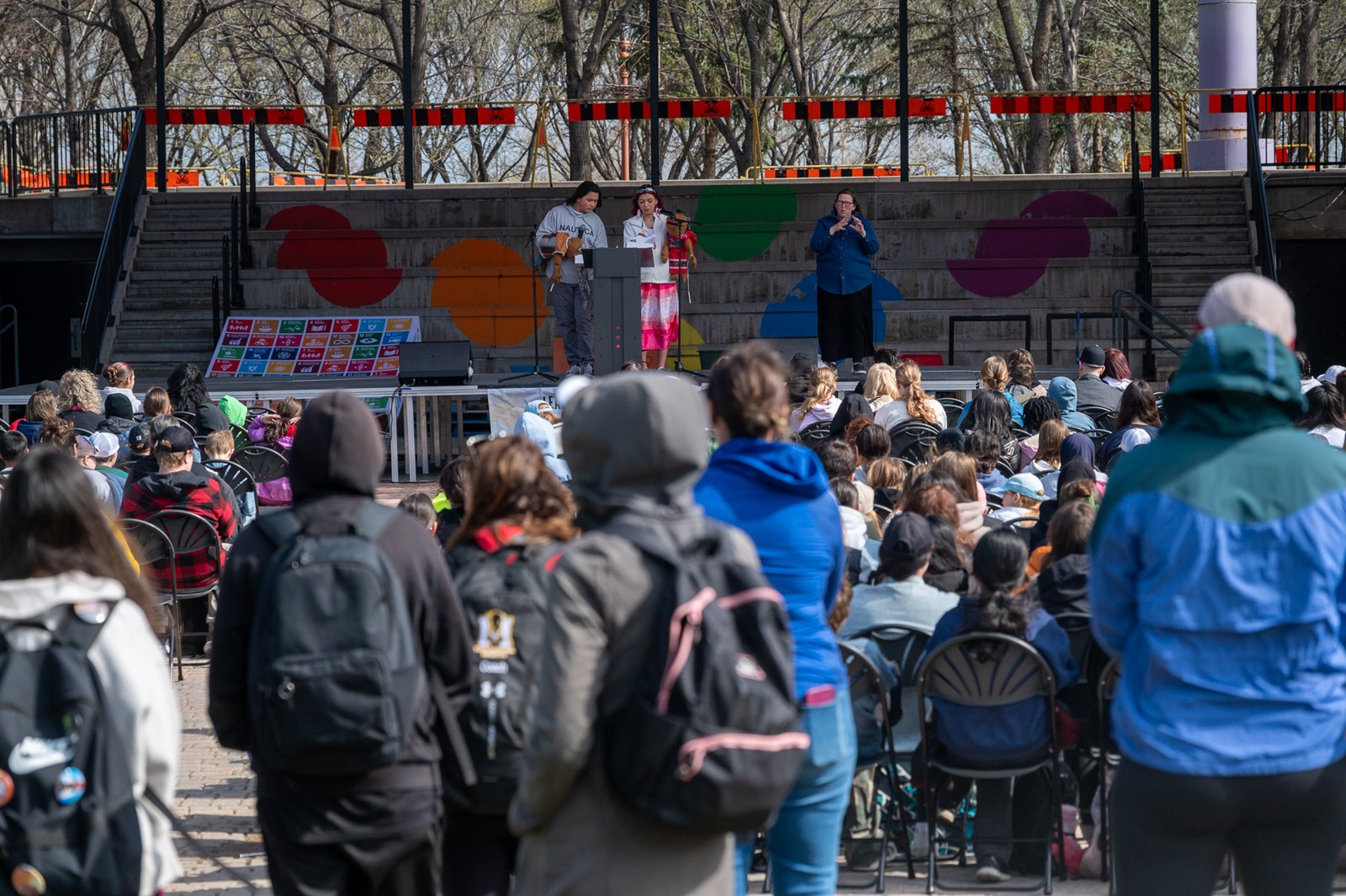
On May 26, members of the School and Classroom Support Team (SCST) came together to share the learning emerging from this year’s 11 SCST Action Groups. Representing staff from Senior Leadership, Clinical Services, with representation from each clinical discipline, Instructional Support, Indigenous Education, Child and Youth Care Workers, Rehabilitation Assistants, Indigenous Language Instructors, School and Family Connectors, and Community Liaison Workers, these cross-functional teams have spent the year advancing key priorities within LRSD’s Multi-Year Strategic Plan.
What stood out was not just the range of projects, but the coherence across them. Each group is working on a different piece of the system, yet all are anchored in the same commitments: belonging, equity, and improved outcomes for students.

11 Action Groups, One Shared Purpose
Throughout the year, monthly SCST meetings were dedicated to collaborative inquiry and action. The result is a set of projects that are both practical and forward-looking.
1. Universal Screeners (Literacy & Numeracy)
- Strengthening early identification of student needs
- Using real-time data to guide Tier 2 and Tier 3 interventions
- Exploring AI-supported decision tools to improve consistency and equity in screening practices
2. Home & School Connections
- Deepening relationships with families to support attendance and engagement
- Developing shared strategies grounded in trust, belonging, and cultural responsiveness
- Using data and dialogue to better understand barriers to student presence
3. LRSD Social & Emotional Framework
- Co-creating a division-wide statement grounded in CASEL domains
- Integrating Indigenous worldviews and neurodiversity-affirming approaches
- Building tools to support staff practice across Tier 1, 2, and 3
4. Artificial Intelligence: Microsoft Copilot in Our Work
- Exploring how AI can support staff efficiency, creativity, and collaboration
- Supporting division-wide AI governance and responsible use
- Building early success with purpose-built agents that reduce workload and enhance professional practice
5. Multilingual Learners
- Strengthening inclusive, culturally responsive supports
- Improving access to clinical services and assessment practices
- Advancing tools like LEAP to create consistent, high-quality learning plans
6. Land-Based Education & UNDRIP
- Embedding Indigenous perspectives and sustainability across learning
- Connecting school-based work to the division-wide Learning with the Land gathering
- Advancing reconciliation through experiential, place-based education
7. Therapeutic Crisis Intervention for Schools (TCIS)
- Moving from training to embedded practice
- Building trauma-informed, relational school environments
- Strengthening coaching, reflection, and accountability systems
8. Community Programming Expansion (RDC of the North)
- Expanding access to community-based programming beyond the school day
- Reducing barriers related to childcare, nutrition, and connection
- Strengthening partnerships and aligning roles across school teams
9. Neurodiversity
- Advancing inclusive, neurodiversity-affirming classroom practices
- Supporting the effective use of visuals and universal design
- Shifting from compliance-based approaches to autonomy and belonging
10. Full-Day Kindergarten & Grade 1 Transition
- Studying the impact of full-day Kindergarten on readiness and development
- Improving continuity between early years programming and Grade 1
- Using educator voice and data to guide professional learning
11. Decolonizing Our Practices
- Reimagining school through Indigenous perspectives
- Centering relationships, land, language, and community
- Moving beyond inclusion toward transformation in how learning is experienced

What We Are Learning Together
Across all 11 groups, several themes are emerging:
- From ideas to action
Teams are not just exploring concepts. They are building tools, frameworks, and practices that can be used in schools now. - From individual roles to collective responsibility
Each group brings together diverse perspectives, strengthening coherence across the system. - From acknowledgment to transformation
Whether through Indigenous education, inclusion, or community engagement, the work is pushing beyond surface-level change. - From initiative to alignment
The Action Groups are helping bring the Multi-Year Strategic Plan to life in concrete and connected ways.

Looking Ahead
The SCST Action Groups have created a strong foundation for continued system learning. As this work moves forward, the focus will be on scaling effective practices, deepening collaboration, and maintaining space for ongoing inquiry.
This is the power of bringing people together across roles and perspectives.
Not as separate initiatives, but as a shared effort to better serve students, families, and communities across LRSD.