


Annick Rauch burst into tears when she crossed the finish line. She had just run the full 42.2 kilometres of the June 2026 Manitoba Marathon, but crossing that line meant more than just finishing a race. It represented something greater. It had become the finish line of Rauch’s greatest battle.
And she had won.
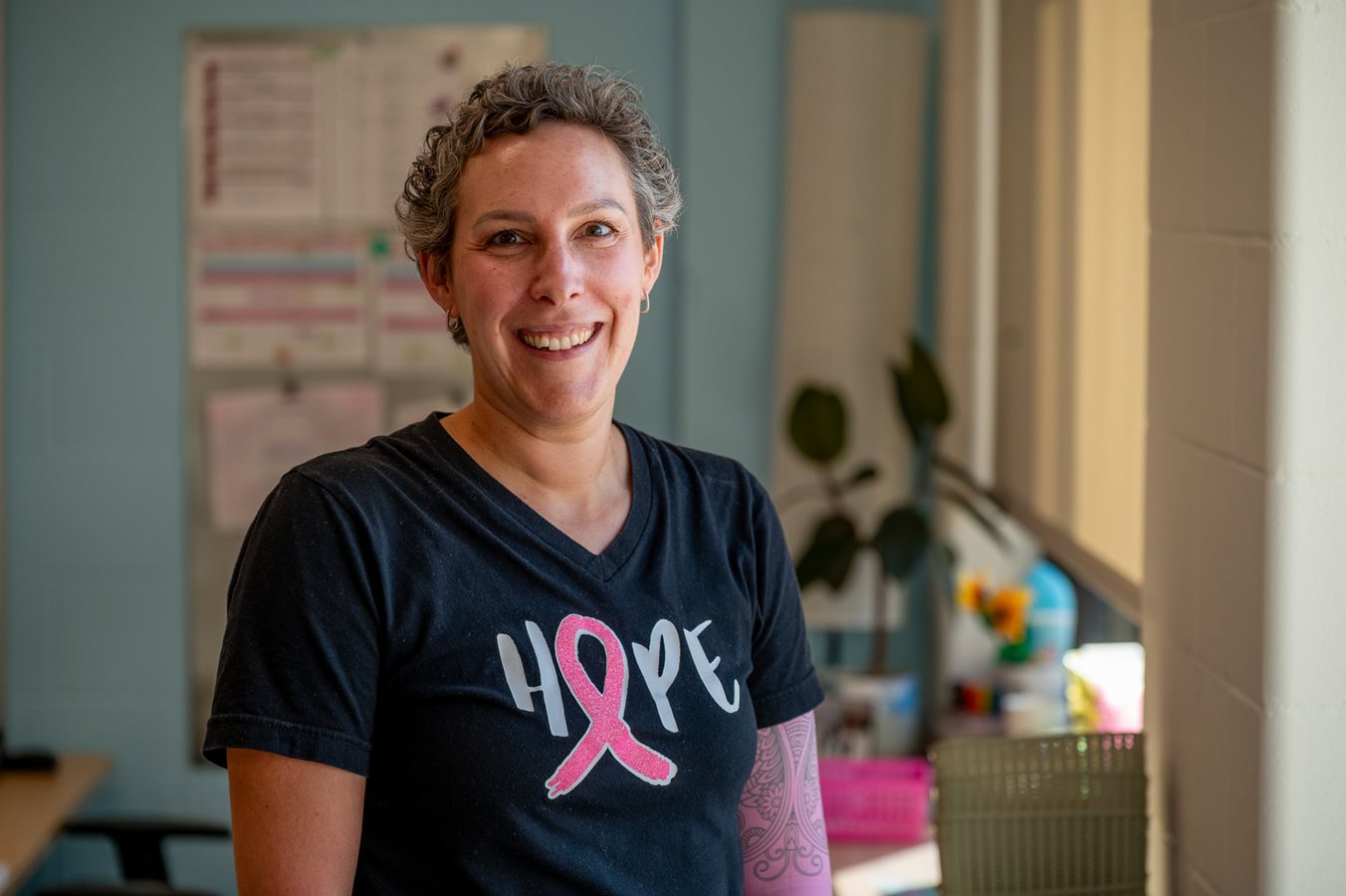
“I was just so proud of myself for the marathon, but also for kicking cancer’s butt,” said Rauch, a Grade 1 teacher at École Mazina-Giizhik who was diagnosed with triple negative breast cancer in April of 2025.
“I was able to release feelings I hadn’t yet processed, and crossing that line was not just like a sigh of relief and pride for running the actual race, but it was all that I had endured the year and some before.”
After her diagnosis, treatment began with a lumpectomy, a surgical operation to remove the breast tumour. Following that, she underwent a lymph node biopsy. And after that, a third surgery to insert a port.
Then chemotherapy began.
“Chemo was the hardest thing I’ve ever gone through,” Rauch said. “It knocked me down, and as a go-getter, busy mom, teacher, I’m used to go-go-go, and I just couldn’t do it.”
Going up the stairs, she ran out of breath. She lost her hair. For nine days afterwards, she couldn’t get out of bed. Treatment was once every 14 days. Finally, some semblance of feeling human again, but in a few days, the not-so-merry-go-round was set to start again.
“Maintaining hope was so important,” she said. “I bought myself eight little rings, and every time I finished a treatment, I had one of my nurses pick one and give it to me. It wasn’t a big thing, but it was just that little thought that ‘I get this, because I did the hard thing.’”
After eight rounds of chemo, near the end of December 2025, she started radiation, five days per week for a month. Finally, she had completed active treatment. It was time to begin rebuilding her strength, in body and spirit.
Book a Screening Mammogram
People aged 45 and over may have a screening mammogram every 2 years. Contact BreastCheck at 1-855-952-4325 to make an appointment.
Screening guidelines and recommendations are available through CancerCare Manitoba’s Breast Cancer Screening Guidelines.
Note: Manitoba expanded breast cancer screening eligibility to age 45 in 2025 and has indicated plans to lower the eligibility age to 40 by the end of 2026.
“When you go through something so physical, you don’t really deal with the emotional. You’re just in survival mode,” she said. “Then everything comes crashing down, and you’re left to process. Like, wow, what did I just go through?”
Rauch refused to let it keep her down.
“It taught me that if I can get through that, I can get through anything.”
Rauch rekindled an old goal to run a marathon, and she began to train. She prioritized her health and built herself up, kilometre by kilometre, step by step. She celebrated her efforts with a trip to Hawaii in April 2026, where she ran a half-marathon, preparing for the full marathon back in Winnipeg.
Even while away from the classroom, Rauch continued to teach. Drawing on her instinct to educate and support others, she began sharing her breast cancer journey through Instagram reels, using her experience to raise awareness.
She created content for her former students and their families to help explain why she was no longer at school. The videos became a way to maintain a sense of purpose during her leave.
Rauch, in year 17 of teaching, has now returned to the classroom.
“I’m so, so happy,” she said. “It’s just so nice to find my purpose again, and to be around kids, and to make a difference.”
Rauch hopes her experience helps others better understand the importance of early detection, self-advocacy, and prioritizing their health. She wants people to know that breast cancer can be difficult to detect, even with clear mammograms, especially for those with dense breasts, and encourages people to attend screenings, do self-checks, and pay attention to changes in their bodies.
“You come first,” Rauch said. “As teachers, we often put ourselves on the back burner. But that’s my biggest message: take care of yourself, so that you can take care of others.”
Canadian Breast Cancer Resources
- Canadian Cancer Society Information about breast cancer symptoms, diagnosis, treatment, screening, and survivorship. Learn about breast cancer
- Canadian Cancer Society Support Services Support programs, transportation assistance, publications, and community resources. Explore support resources
- Government of Canada — Breast Cancer National information about breast cancer risk factors, symptoms, screening, and prevention. Visit Canada.ca
- Canadian Breast Cancer Network Patient education, advocacy, and support resources. Visit the Canadian Breast Cancer Network
- Breast Cancer Canada Research updates, educational materials, and patient tools. Visit Breast Cancer Canada
Breast Density Information
Breast density can make cancer more difficult to see on a mammogram. These resources provide information about breast density, screening options, and questions to discuss with a health-care provider.
- Dense Breasts Canada Information about breast density, screening options, and self-advocacy. Visit Dense Breasts Canada
- Canadian Cancer Society — Breast Density Resources explaining breast density and how it can affect mammogram results. Learn about breast density
.webp)