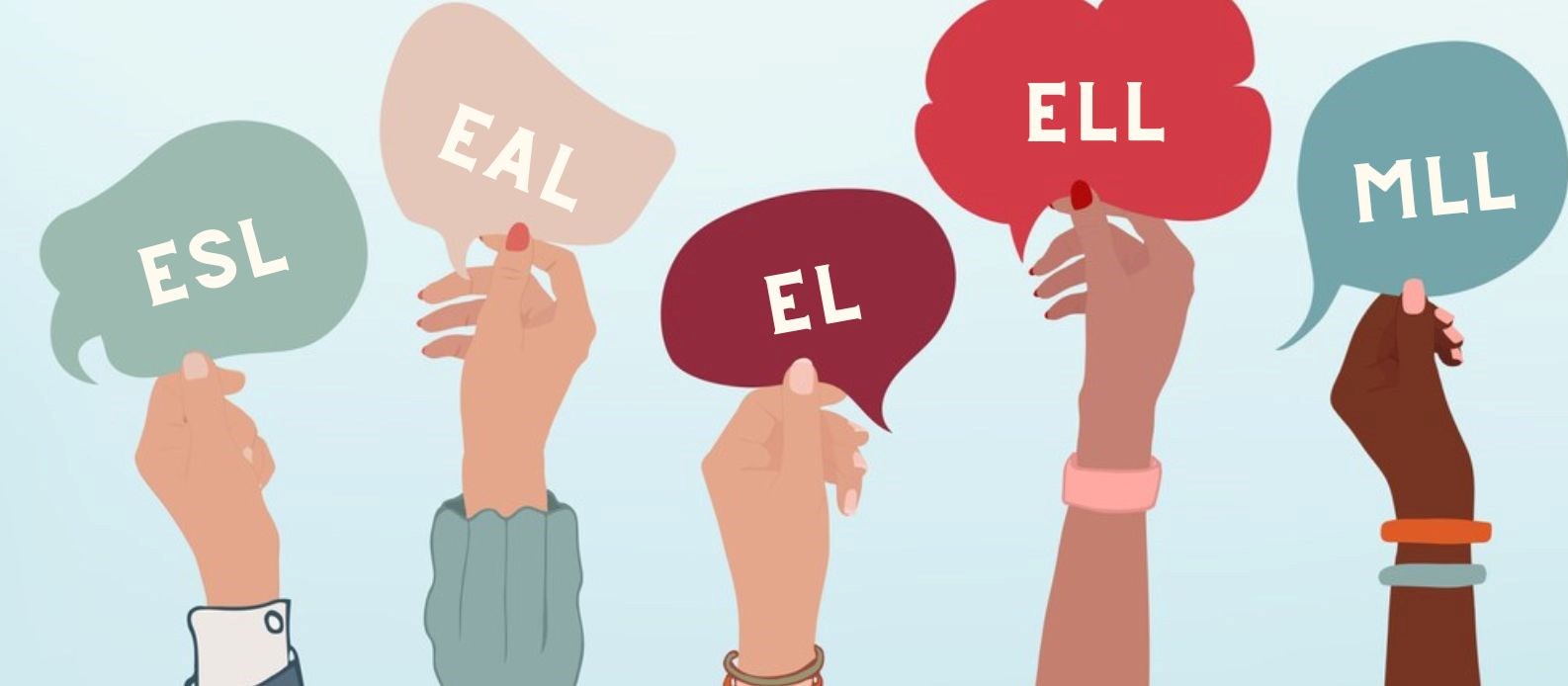
ESL, EAL, EL, ELL, MLL…So Many Acronyms, Which One Should I Be Using?
In the field of education, there are many terms with acronyms floating around. The area of English language learning is no exception. First, there was English as a Second Language (ESL). This term actually began in the 15th century as the British empire started to grow. They needed a way to communicate with and effectively govern their overseas businesses and colonies.
More recently, the term English as an Additional Language (EAL) was created and is still being widely used. This change occurred in order to acknowledge that many English Learners already know more than just one language, which would make English an additional, rather than a second language. There are numerous other terms with acronyms in this field, but in our work towards greater equity, inclusion and anti-racist practices, the term that many and we, the Louis Riel School Division, are now endeavoring to use more consistently is Multilingual Learner (MLL).
There are several reasons why MLL is the preferred term. First, it is a positive term which defines students in terms of their talents and potential linguistic accomplishments rather than what they lack (proficiency in the school language). Approximately 20 years ago, Dr. Gloria Ladson-Billings, pedagogical theorist and educator known for her work in culturally relevant pedagogy, introduced the concept of viewing English learners from an asset rather than a deficit perspective. Today we believe and value the importance of Culturally & Linguistically Sustaining Pedagogy, in order to reflect the very rich and diverse student population we have in our schools.
According to Jim Cummins, Language & Literacy Development Professor at the University of Toronto, students whose multilingual identities are affirmed perceive that teachers have high expectations for them to succeed in school. Therefore, students are more likely to engage actively with learning if their teachers have these high expectations. In contrast, when students’ identities are defined by their current limitations in the school language or by terms that have othering or negative connotations, their confidence in their abilities may be affected, and thus, they may engage less actively in their learning.
Multilingual Learners bring many assets to the classroom. While they are developing proficiency in multiple languages, we must recognize the information and ideas that they have already learned. These home and community experiences can become the focus of important daily instruction to benefit all students. Finally, while English is the language of instruction, it does not have to be the only language of instruction, nor does it have to be the only language of learning.